Tax-free shopping in Japan: how the new refund system works
Since November 1, 2026 you pay tax at the till and get it back after a customs check at the airport. Here is what to do in the shop and on departure day.
Last checked By Yoshi7 min read7 sources
Quick answer
For purchases made on or after November 1, 2026, Japan no longer takes the consumption tax off at the till: you pay the full tax-inclusive price, then get the tax back after customs confirms at the airport or seaport that the goods are leaving Japan. To qualify, you must scan your passport at a customs terminal within 90 days of the purchase, before you check in your bags, with every tax-free item from that receipt still with you.
That last part catches people out, so the rest of this page walks through what happens in the shop, what to do at the airport, and the mistakes that cost you the refund. For cash, cards and phones on your trip, see our Money and phones guides.
What changed on November 1, 2026
Until October 31, 2026, tax-free shops simply charged eligible visitors the price without consumption tax. The Japan Tourism Agency calls the new system the “Refund Method”. The main differences for a traveler:
| Until October 31, 2026 | From November 1, 2026 | |
|---|---|---|
| Price you pay in the shop | Tax-exclusive | Tax-inclusive |
| When you get the tax back | At the till | After customs confirms export on departure |
| Sealed bags for food, drinks and cosmetics | Required | Abolished |
| Customs step at departure | Passport check | Terminal scan, sometimes an inspection, within 90 days of purchase |
What decides the system is the purchase date, not your flight date. Something you bought on October 31 follows the old rules even if you fly home in November.
The change in packaging sounds like good news, and it is for convenience: shops no longer seal snacks and cosmetics in special bags. But the rule behind the bags still applies. If you eat, drink or use any consumable you bought tax-free, you lose the refund for it, and possibly for the rest of that receipt (see below).
Who can use it and what counts
According to GO TOKYO, the official Tokyo travel guide, these people are eligible:
- Foreign nationals who do not live in Japan, with the status of residence “Temporary Visitor”, “Diplomat” or “Official”, or who were granted landing permission.
- Japanese nationals who have lived overseas for more than two years and are within six months of a temporary return, with proof of their overseas address.
If you arrive on a tourist entry stamp, you are in the first group.
The purchase rules, from the Japan Tourism Agency:
- Minimum spend: ¥5,000 or more, before tax, per day at the same store. Some shops send their paperwork through a shared tax-free counter, for example in a department store or shopping mall. In that case, purchases you make on the same day at different stores can be added together to reach ¥5,000.
- No upper limit by category. GO TOKYO notes there is no limit on the purchase amount based on product type. The practical limit is that you can only buy what you can carry out of Japan yourself when you leave.
- Not eligible: gold and platinum bullion, and items that are already exempt from consumption tax.
- The goods must leave Japan with you. Shipping is the exception: some shops can send goods overseas for you under a direct shipping arrangement. Ask the shop, because not all of them offer it.
What to do in the shop
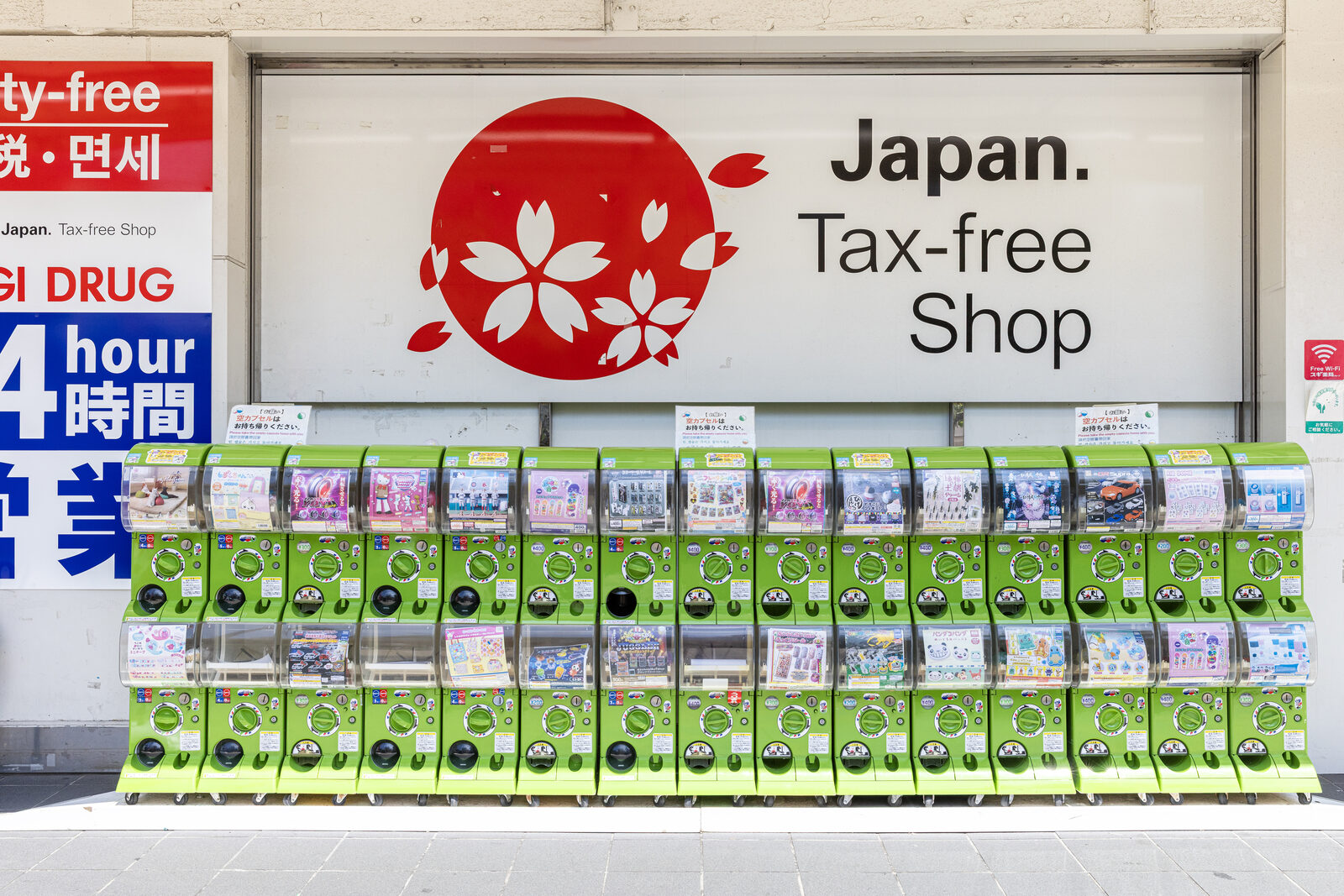
- Look for a shop showing the tax-free logo and tell the staff you want tax-free.
- Show your original passport. GO TOKYO says copies are not accepted.
- Pay the full price, tax included.
- Follow the shop’s instructions for choosing how you want the refund paid. The Japan Tourism Agency says these instructions are given at the time of purchase, by the shop or by the refund service company it works with.
Keep the receipt and any refund instructions together with your passport. You do not always have to show receipts at customs, but the Japan Tourism Agency says customs may ask to see them.
If you buy one item costing ¥1,000,000 or more before tax, keep its certificate of authenticity or warranty with it. Customs may ask for it.
At the airport: the customs step
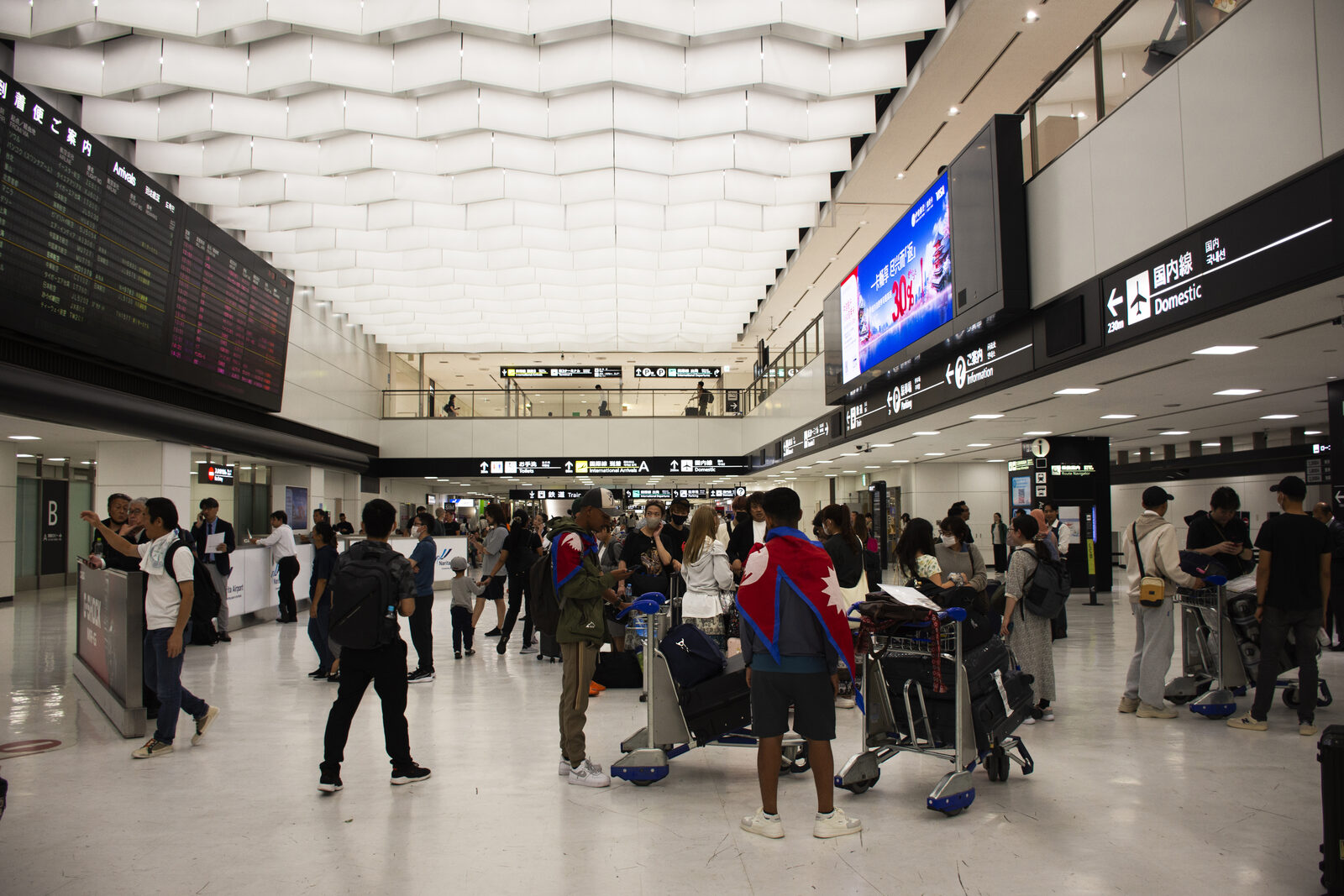
The tax-free terminals, a kiosk or an electronic terminal, are in the international departure lobby, before baggage check-in. Customs keeps floor maps of the terminals for each airport and seaport.
- Go to a terminal before you check in. Have your passport and all your tax-free goods with you, including anything you plan to put in your suitcase.
- Scan your passport. The Japan Tourism Agency says this takes a few seconds.
- Read the result. A green result means no inspection is needed and the customs step is done. A red result means a customs officer will check the goods at the inspection area.
- Then check in your bags and go through security as normal.
Once a bag is checked in with the airline, you cannot get it back to do the tax-free procedure. If your purchases are inside it, there is no refund. This is the single most important rule of the new system.
At the seven busiest airports, Narita, Haneda, Kansai, Chubu, Fukuoka, New Chitose and Naha, you can do the same step on your phone through Visit Japan Web instead of a terminal. It only works in the part of the departure lobby covered by customs’ dedicated Wi-Fi, before the security checkpoint. Only “Temporary Visitor”, “Diplomat” and “Official” status holders can use this online option. At Narita, the airport says the Wi-Fi is on the 4th floor of Terminal 1, the 3rd floor of Terminal 2 and the 2nd floor of Terminal 3.
Leave time. The Japan Tourism Agency says you must finish the customs step, including any inspection, before you board. If you give up halfway through an inspection because your flight is leaving, it does not count, and neither the airline nor customs will compensate you for a missed flight.
Two more location rules:
- Connecting through another Japanese airport: do the procedure at the last airport you leave Japan from, not at the domestic airport where your trip starts.
- Cruises: on a cruise that ends outside Japan, use the electronic terminal at your last Japanese port before you check in your baggage. For a “fly and cruise” trip that returns to Japan before you fly home, do it at the departure airport when you finally leave.
How the refund is paid
The tax is refunded by the shop or its refund service company after customs confirms the export. How you receive it depends on the shop, and the Japan Tourism Agency tells travelers to ask the shop for details.
At Narita, for example, the airport describes two routes:
- Cash, in Japanese yen only: use a cash refund kiosk in the airport after the customs step. You do not need to show the goods again. Some stores do not offer a cash refund at the airport.
- Credit card, QR code payment (such as Alipay) or bank transfer: finish the refund online, following the instructions you were given when you bought the goods.
Either way, you get nothing until customs has confirmed the export. We could not find an official statement on how long a card refund takes to arrive or what fees refund companies charge, so check the instructions from your shop.
Mistakes that cost you the refund
- Packing purchases in checked luggage before the customs step. Do the terminal first, then check in.
- Using one item from a receipt. Customs confirms each purchase transaction (each receipt) as a whole. If even one item from a receipt is missing, none of the items on that receipt get a refund, including the ones you still have. Buying snacks on a separate receipt from things you will take home avoids this.
- Scanning anyway after eating or using consumables. If you consumed any food, drink, medicine or cosmetics you bought tax-free, do not use the terminal. Tell a customs officer at the counter instead. Items that are not consumables, such as clothes or electronics, can be used in Japan as long as they leave with you.
- Missing the 90-day window. The customs step must happen within 90 days of the purchase date.
- Not exporting after the scan. Goods that passed customs must leave Japan without delay. If they do not, the tax is collected and penalties can apply.
- Arriving at the airport late. Allow extra time for a possible red result and a queue at the terminals.
The refund is separate from Japan’s ¥3,000 departure tax, which your airline adds to the ticket; see what Japan’s departure tax means for you.
If you are also deciding how to travel between cities before you fly home, our guide on whether the Japan Rail Pass is worth it shows how to compare it with single Shinkansen tickets.
The rules on this page were checked against the Japan Tourism Agency, JNTO, Narita Airport and GO TOKYO pages on November 26, 2026. The system is new and the details of refund payment vary by shop and airport, so check the shop’s instructions and the Japan Tourism Agency’s travelers’ page before you fly.
Sources
Checked for this guide. Prices and rules can change, so confirm with the operator before you travel. Spotted something out of date? Email contact@japantravelanswers.com.
- What is the Refund Method? (travelers' page), Japan Tourism Agency
- FAQ for travelers: When Purchasing, Japan Tourism Agency
- FAQ for travelers: When Departing, Japan Tourism Agency
- FAQ for travelers: Regarding Refunds, Japan Tourism Agency
- Everything You Need to Know: Japan's New Tax-Free Shopping System, JNTO
- Consumption tax refund procedure for foreign visitors to Japan, Narita International Airport
- Tax-Free Shopping, GO TOKYO (Tokyo Convention & Visitors Bureau)

Yoshi, Founder & Editor
Yoshi is an AI engineer based in Japan and a passionate domestic traveler. He combines local knowledge, analytical thinking, and technology to help international visitors explore Japan with confidence through clear, practical travel guides and tools.